
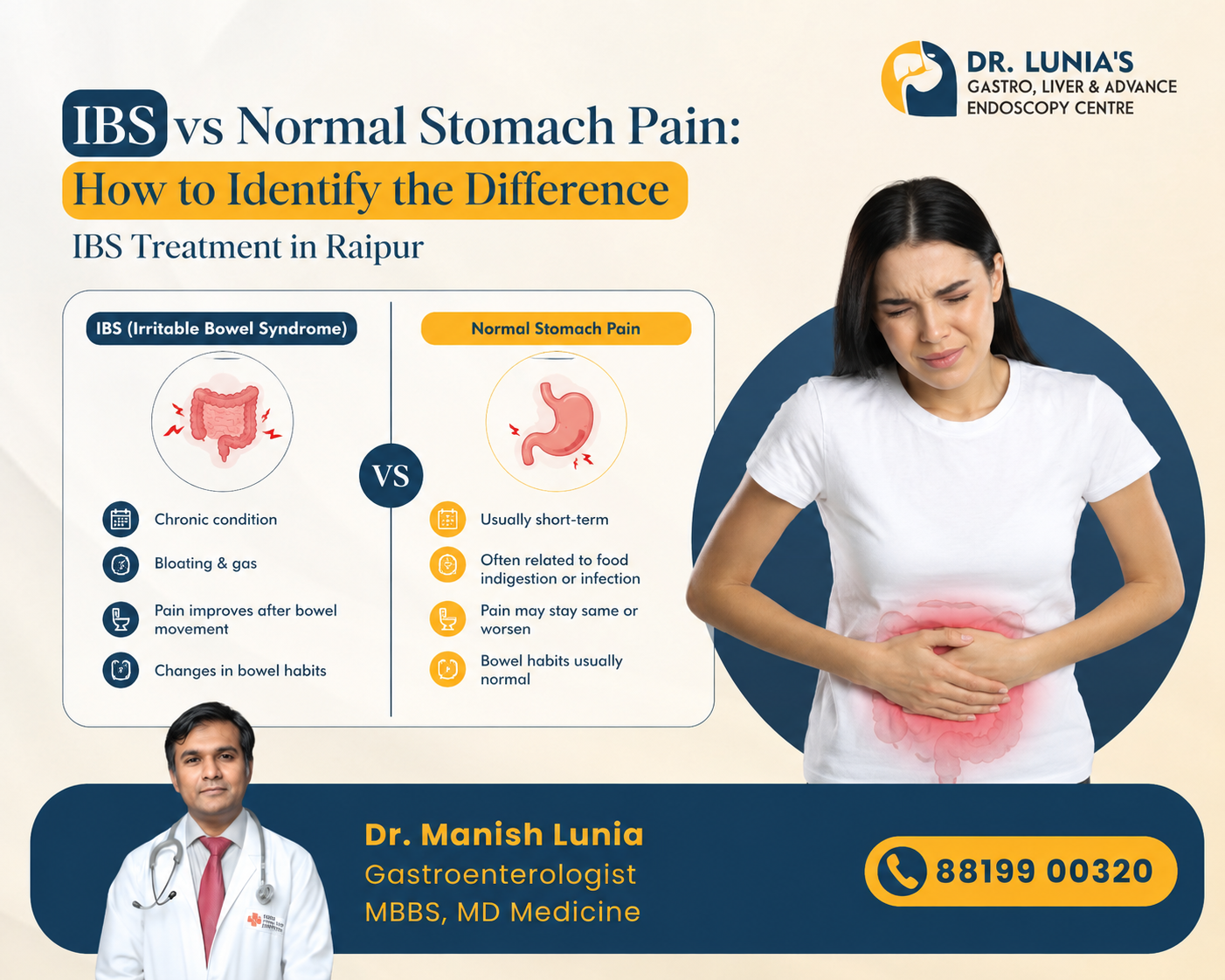
Almost everyone experiences stomach pain occasionally, but when abdominal pain keeps returning along with bloating, constipation, diarrhea, or changes in bowel movements, it may be a sign of Irritable Bowel Syndrome (IBS). If these digestive problems are becoming frequent, seeking proper IBS treatment in Raipur can help identify the cause and manage the symptoms before they begin affecting your everyday routine.
Maybe you ate too quickly, had something unusually spicy, skipped a meal, or simply ate more than your stomach could comfortably handle. In many cases, this type of ordinary stomach discomfort settles within a few hours or a day. IBS, however, tends to behave differently because the symptoms often return and are commonly associated with changes in bowel habits.
Irritable Bowel Syndrome is a long-term digestive condition that can cause recurring abdominal pain, cramping, bloating, constipation, diarrhea, or a combination of these problems. The symptoms can interfere with work, travel, eating habits, sleep, and daily activities when they are not properly managed.
Dr. Manish Lunia provides IBS treatment in Raipur at Dr Lunia’s Center for patients experiencing recurring stomach pain and bowel-related concerns. Consulting the Best Gastroenterologist in Raipur can help determine whether your symptoms are related to IBS or another digestive condition and guide you toward an appropriate treatment plan.
So, how can you tell the difference between IBS and an ordinary stomach ache? The key lies in understanding how often the pain occurs, how long it lasts, what triggers it, and whether your bowel habits have changed. Let us understand these differences in simple terms.
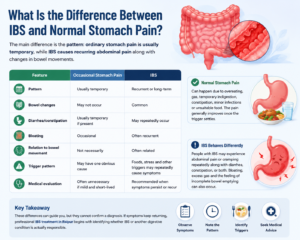
What Is the Difference Between IBS and Normal Stomach Pain?
The main difference is the pattern: ordinary stomach pain is usually temporary, while IBS causes recurring abdominal pain along with changes in bowel movements.
A normal stomach ache can happen for many simple reasons. Eating too much, gas, temporary indigestion, constipation, a minor stomach infection, or eating food that does not suit you may cause short-term discomfort. Once the trigger settles, the pain generally improves.
IBS behaves differently.
People with IBS may experience abdominal pain or cramping repeatedly. At the same time, they may notice diarrhea, constipation, or periods when the two alternate. Bloating, excess gas, and a feeling that the bowel has not emptied completely can also occur.
A simple way to understand the distinction is:
| Feature | Occasional Stomach Pain | IBS |
| Pattern | Usually temporary | Recurrent or long-term |
| Bowel changes | May not occur | Common |
| Diarrhea/constipation | Usually temporary if present | May repeatedly occur |
| Bloating | Occasional | Often recurrent |
| Relation to bowel movement | Not necessarily | Often related |
| Trigger pattern | May have one obvious cause | Foods, stress and other triggers may repeatedly cause symptoms |
| Medical evaluation | Often unnecessary if mild and short-lived | Recommended when symptoms persist or recur |
These differences can guide you, but they cannot confirm a diagnosis. If symptoms keep returning, professional IBS treatment in Raipur begins with identifying whether IBS or another digestive condition is actually responsible.
What Symptoms Suggest You May Need IBS Treatment in Raipur?
Recurring abdominal pain together with persistent changes in your bowel habits is one of the strongest reasons to consider an IBS evaluation.
IBS does not feel exactly the same for everyone. One person may struggle mainly with constipation, while another may have frequent loose stools. Some people alternate between the two.
What Does IBS Stomach Pain Usually Feel Like?
IBS pain commonly feels like abdominal cramping, aching, pressure, or discomfort that repeatedly returns.
The pain may sometimes be connected with passing stool. You may notice that the discomfort changes after a bowel movement, or that episodes of pain happen at the same time as changes in how frequently you pass stool or what the stool looks like.
This recurring relationship between pain and bowel habits is more suggestive of IBS than a random one-time stomach ache.
What Bowel Changes Are Common With IBS?
IBS commonly causes constipation, diarrhea, or a mixture of both.
Doctors often describe IBS according to the main bowel pattern:
- IBS-C mainly involves constipation and hard or difficult-to-pass stools.
- IBS-D mainly involves diarrhea and loose or watery stools.
- IBS-M involves a mixture of constipation and diarrhea.
Some people also notice mucus in their stool or feel as though they still need to use the toilet even after having a bowel movement.
If this pattern is becoming part of your regular life, consulting the Best Gastroenterologist in Raipur can help determine what is causing it rather than simply treating each episode separately.
How Long Should Stomach Pain Last Before You Suspect IBS?
A single day of stomach discomfort usually does not indicate IBS; doctors look for a recurring pattern of abdominal pain and bowel changes over time.
Current diagnostic criteria focus on recurrent abdominal pain associated with bowel movements and/or a change in stool frequency or form. Symptoms need to follow a sustained pattern rather than appearing as one isolated episode.
This distinction matters.
Imagine you eat very spicy food at a function and develop gas, loose stools, and abdominal discomfort that evening. You feel normal again the following day. That episode alone would not normally suggest IBS.
Now imagine experiencing abdominal cramps and bloating repeatedly, with constipation one week and loose stools another week. You have been dealing with the pattern for months, and it is beginning to affect your daily routine. That deserves medical evaluation.
Rather than self-diagnosing based only on duration, patients with persistent symptoms should seek IBS treatment in Raipur to determine the actual cause.
Can IBS Cause Pain Every Day?
Yes, some people with IBS experience symptoms frequently, but IBS does not necessarily cause pain every day.
IBS symptoms often come and go. You might feel completely normal on certain days and experience a flare-up on others.
This unpredictability is one reason IBS can be frustrating. A person may feel well for several days and suddenly develop cramps, bloating, constipation, or diarrhea after a particular meal or during a stressful period.
Having symptom-free days does not automatically rule out IBS.
Dr. Manish Lunia evaluates the complete symptom pattern rather than relying on one day’s experience when planning IBS treatment in Raipur.
What Usually Triggers IBS Stomach Pain?
IBS flare-ups may be associated with certain foods, stress, altered bowel habits, and individual digestive sensitivities.
There is no single trigger that affects everyone with IBS. What causes discomfort in one person may cause no problem at all in another.
Can Food Trigger IBS Symptoms?
Yes, certain foods can worsen symptoms in some people with IBS, but individual triggers vary considerably.
Some people notice discomfort after large meals, fatty foods, caffeine, or particular carbohydrates. Instead of unnecessarily removing many foods from your diet, keeping a simple food-and-symptom diary can be useful.
Write down what you eat, when symptoms appear, what type of bowel movement you have, and how severe the discomfort feels.
Over time, patterns may become easier to identify.
Can Stress Make IBS Worse?
Yes. Stress can worsen IBS symptoms because communication between the brain and digestive system plays an important role in IBS.
This does not mean IBS is “just stress” or imaginary. IBS is recognized as a disorder involving gut-brain interaction. Changes in how the gut and brain communicate can affect bowel movement and sensitivity.
For some patients, stressful situations are followed by increased urgency, cramps, diarrhea, constipation, or bloating.
A personalized plan from the Best Gastroenterologist in Raipur therefore looks beyond individual symptoms and considers diet, bowel habits, lifestyle, triggers, and overall digestive health.
How Is IBS Treatment in Raipur Diagnosed?
IBS is diagnosed mainly by evaluating your symptoms, medical history, bowel pattern, and whether additional tests are needed to exclude other conditions.
There is no single blood test, scan, or endoscopy that simply says “positive for IBS.” Symptoms of IBS can overlap with several other digestive diseases, so diagnosis needs to be thoughtful.
Dr. Manish Lunia may ask questions such as:
- When did your abdominal pain begin?
- How often does it happen?
- Does passing stool change the pain?
- Have your stools become harder or looser?
- Has the frequency of bowel movements changed?
- Do certain foods trigger symptoms?
- Have you noticed blood in the stool?
- Have you lost weight without trying?
- Do symptoms wake you from sleep?
Your answers help create a much clearer picture.
Do You Need a Colonoscopy to Diagnose IBS?
Not every patient with suspected IBS needs a colonoscopy.
Whether further testing is required depends on your age, medical history, symptoms, family history, and the presence of warning signs.
A doctor may recommend blood tests, stool tests, colonoscopy, imaging, or other investigations when necessary to rule out conditions that can resemble IBS.
At Dr Lunia’s Center, Dr. Manish Lunia also provides advanced gastroenterology services, including colonoscopy and endoscopic evaluation when clinically appropriate.
The purpose of proper IBS treatment in Raipur is therefore not simply to label recurring stomach pain as IBS. It is to establish the most likely diagnosis and make sure important alternative causes are considered.
What Conditions Can Be Mistaken for IBS?
Several digestive conditions can produce symptoms similar to IBS, which is why recurring stomach pain should not always be self-diagnosed.
For example, constipation, food intolerance, gastrointestinal infections, celiac disease, inflammatory bowel disease (IBD), and other gastrointestinal disorders can produce abdominal discomfort or changes in bowel habits.
IBD deserves particular attention because its name sounds similar to IBS, but the two conditions are different.
IBS is a disorder of gut-brain interaction and does not cause the same type of visible intestinal inflammation associated with inflammatory bowel disease. IBD includes conditions such as Crohn’s disease and ulcerative colitis, which cause chronic inflammation in the digestive tract.
This is one reason consulting the Best Gastroenterologist in Raipur is useful when symptoms are persistent, unusual, or becoming worse.
Which Warning Signs Are Not Typical of Simple IBS?
Blood in the stool, unexplained weight loss, fever, severe or rapidly worsening pain, and persistent vomiting need medical attention rather than being assumed to be IBS.
Occasional digestive discomfort is common, but some symptoms should never be ignored.
Seek prompt medical advice if you develop:
- Blood in the stool or black stools
- Unexplained weight loss
- Persistent vomiting
- Fever with abdominal symptoms
- Severe or rapidly worsening abdominal pain
- Significant weakness or fainting
- A markedly swollen or tender abdomen
Severe abdominal pain accompanied by bleeding, fever, nonstop vomiting, fainting, or other significant symptoms may require urgent medical assessment.
These symptoms do not automatically mean you have a serious disease, but they should be properly investigated.
If your symptoms are recurrent rather than an emergency, arranging IBS treatment in Raipur with Dr. Manish Lunia can help clarify what is happening.
How Does IBS Treatment in Raipur Help Control Symptoms?
IBS treatment focuses on controlling your particular symptoms and triggers rather than using one identical treatment for every patient.
There is no single IBS treatment that works equally well for everyone. Treatment is generally individualized according to whether constipation, diarrhea, pain, bloating, or a combination of symptoms is most troublesome.
What Dietary Changes Can Help With IBS?
Dietary changes can help many patients, but the best approach is to identify personal triggers instead of following an unnecessarily restrictive diet.
A patient may be advised to adjust fiber intake, meal size, hydration, or foods that consistently trigger symptoms.
Eating regular meals and avoiding very large portions may help some people. Drinking adequate water is particularly important when constipation is a major symptom.
A food diary can also make consultations more useful because it gives your doctor a clearer picture of what happens before each flare-up.
What Lifestyle Changes Can Help With IBS?
Regular physical activity, adequate sleep, stress management, and consistent eating habits may help reduce IBS flare-ups.
Your digestive system responds to your overall routine. Long periods of inactivity, irregular meals, poor sleep, and ongoing stress can make digestive symptoms harder to manage in some people.
Lifestyle changes do not replace medical evaluation, but they can form an important part of IBS treatment in Raipur.
Are Medicines Used for IBS?
Yes, medicines may be recommended when lifestyle and dietary measures alone are not enough.
The medicine chosen depends on the dominant symptoms. Treatment for constipation-predominant IBS will naturally be different from treatment for diarrhea-predominant IBS.
This is another reason copying someone else’s IBS prescription is not advisable.
Dr. Manish Lunia can assess the symptom pattern and determine whether dietary management, lifestyle changes, medication, further investigation, or a combination of approaches is appropriate.
When Should You Consult the Best Gastroenterologist in Raipur for IBS Symptoms?
You should consider seeing a gastroenterologist when abdominal pain and bowel changes repeatedly return, persist, interfere with daily life, or occur with concerning symptoms.
You do not need to wait until digestive problems become unbearable.
If you constantly plan your day around finding a toilet, avoid eating outside because you fear symptoms, repeatedly struggle with constipation, or experience frequent abdominal pain and bloating, your digestive health deserves attention.
Dr. Manish Lunia is a Medical Gastroenterologist at Dr Lunia’s Center in Raipur and treats a range of digestive conditions. The center also provides gastroenterology procedures including endoscopy, colonoscopy, ERCP, and Fibroscan when clinically indicated.
Patients looking for the Best Gastroenterologist in Raipur should focus on receiving an accurate diagnosis and a treatment plan suited to their symptoms rather than relying only on temporary remedies.
Why Choose Dr. Manish Lunia for IBS Treatment in Raipur?
Dr. Manish Lunia provides patient-focused gastroenterology care aimed at identifying the cause and pattern of recurring digestive symptoms before planning treatment.
IBS management works best when patients can clearly discuss their symptoms, bowel habits, food triggers, and concerns without feeling rushed or embarrassed.
At Dr Lunia’s Center, patients can seek evaluation for IBS as well as other stomach, intestinal, liver, and digestive problems. Diagnostic and therapeutic services available at the center include endoscopy, colonoscopy, ERCP, and Fibroscan.
For someone searching for the Best Gastroenterologist in Raipur, this combination of specialist evaluation and access to advanced gastroenterology services can make the diagnostic journey more convenient.
Most importantly, IBS care should be individualized. What works well for one patient may not work for another.
Can IBS Be Managed Successfully With the Right Treatment?
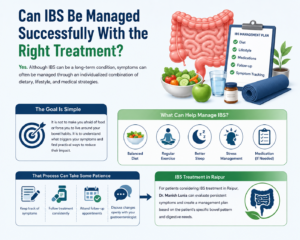
Yes. Although IBS can be a long-term condition, symptoms can often be managed through an individualized combination of dietary, lifestyle, and medical strategies.
The goal is not to make you afraid of food or force you to live around your bowel habits. It is to understand what triggers your symptoms and find practical ways to reduce their impact.
That process can take some patience.
Keeping track of symptoms, following treatment consistently, attending follow-up appointments, and discussing changes openly with your gastroenterologist can make long-term management easier.
For patients considering IBS treatment in Raipur, Dr. Manish Lunia can evaluate persistent symptoms and create a management plan based on the patient’s specific bowel pattern and digestive needs.
Frequently Asked Questions About IBS Treatment in Raipur
These FAQs reflect common search-style questions people use when trying to understand IBS and recurring stomach pain.
How do I know if my stomach pain is IBS?
IBS is more likely when abdominal pain repeatedly occurs alongside changes in bowel habits, such as constipation, diarrhea, or changes in stool frequency or appearance. One episode of stomach pain is not enough to diagnose IBS. If the pattern keeps returning, consider an evaluation for IBS treatment in Raipur.
How do I know if my stomach pain is serious?
Severe or persistent pain, blood in the stool or vomit, unexplained weight loss, persistent vomiting, fever, fainting, or a swollen and tender abdomen can indicate a problem requiring prompt medical attention.
How can I tell the difference between IBS and gas pain?
Gas pain is often temporary and may improve after passing gas, while IBS tends to cause recurring abdominal discomfort together with changes in bowel habits. Persistent symptoms should be evaluated rather than repeatedly assumed to be gas.
Can IBS cause stomach pain every day?
It can, although the frequency varies considerably. Some patients experience frequent symptoms, while others have periods when they feel well between flare-ups.
Does IBS cause diarrhea and constipation?
Yes. IBS can occur mainly with constipation, mainly with diarrhea, or with a mixture of both. Identifying your bowel pattern helps the Best Gastroenterologist in Raipur choose an appropriate management strategy.
What is the best treatment for IBS?
There is no single best treatment for every patient. Management may involve dietary adjustments, lifestyle changes, symptom-specific medication, and treatment of individual triggers. Personalized IBS treatment in Raipur is therefore more appropriate than following a generic IBS diet or medication plan.
Which doctor should I consult for IBS in Raipur?
A gastroenterologist is the specialist who diagnoses and manages digestive system disorders such as IBS. Patients with recurring abdominal pain and bowel changes can consult Dr. Manish Lunia at Dr Lunia’s Center for assessment by a Best Gastroenterologist in Raipur.
How Can You Take the Next Step Toward Better Digestive Health?
If stomach pain keeps returning with constipation, diarrhea, bloating, or changes in bowel movements, getting evaluated is better than continuing to guess the cause.
A temporary stomach ache and IBS can initially feel similar, but the pattern tells an important story. Ordinary digestive discomfort usually settles, whereas IBS tends to return and is closely connected with bowel changes.
Pay attention to how often symptoms occur, what triggers them, and whether your bowel habits have changed. Most importantly, do not automatically label every recurring stomach problem as IBS because other digestive conditions can produce similar symptoms.
For personalized IBS treatment in Raipur, you can consult Dr. Manish Lunia at Dr Lunia’s Center, Lunia’s Tower, near Kalibadi Chowk, Hanuman Nagar, Janta Colony, Raipur, Chhattisgarh.
A consultation with the Best Gastroenterologist in Raipur can help you understand why your symptoms are occurring and what practical steps can help you get your digestive routine back on track.